
Why Americans Spend More and Feel Worse: The Hidden Health Trap

America has one of the most advanced medical systems in the world, yet millions of people feel tired, stressed, under-slept, overfed, undernourished, and financially exposed.
That contradiction is the heart of the American health trap.
We spend more on health care than other wealthy countries. We have world-class hospitals, medical devices, specialists, drugs, and emergency care. Yet many Americans live with chronic pain, anxiety, poor sleep, weight gain, high blood pressure, diabetes risk, burnout, and medical bills they worry they cannot afford.
The problem is not one thing. It is a system of pressures that stack up:
Food is cheap, fast, and often engineered to be overeaten.
Work is demanding, unstable, or sedentary.
Sleep gets treated like a luxury.
Daily movement has been pushed out of normal life.
Preventive care can feel confusing, expensive, or out of reach.
Insurance often pays more easily for crisis care than everyday prevention.
People wait until symptoms become impossible to ignore.
This article is informational only and is not medical advice. For personal health decisions, talk with a qualified clinician.

America spends heavily after health has already broken down
The United States is very good at rescue care.
If someone has a heart attack, suffers a traumatic injury, needs advanced cancer treatment, or requires a complex surgery, American medicine can be extraordinary. The tools are impressive. The expertise is real. Many lives are saved every day.
But rescue care is expensive. It often comes late. And it does not erase the years that came before.
A large share of poor health develops slowly. Blood pressure climbs quietly. Insulin resistance builds over time. Sleep debt accumulates. Stress hormones stay elevated. Muscles weaken. Joints stiffen. Alcohol intake creeps up. Processed food becomes the default. People ignore small symptoms because life is busy and care is costly.
Then one day, the body sends a bill.
That bill may look like a diagnosis, a prescription, lost wages, a hospital stay, or an insurance deductible. It may look like fatigue that never clears, back pain that changes how someone lives, or anxiety that makes ordinary days feel heavy.
The hidden problem is that America often treats health like a repair service rather than a living system.
A car owner who never changes the oil, never checks the tires, and ignores every warning light will eventually pay more. The same pattern applies to the body, except the cost is not only money. It is energy, mobility, time, confidence, and choice.
Waiting until you are sick can be one of the most expensive decisions of your life, especially in a country where medical care and insurance can be financially complicated.
The food environment pushes people toward poor health
Food choice matters, but food choice does not happen in a vacuum.
Many Americans live in an environment where the easiest foods to buy, afford, store, and eat are not the foods that support long-term health. Ultra-processed foods are everywhere. Fast food is convenient. Sugary drinks are cheap. Snacks are sold at gas stations, pharmacies, checkout lines, vending machines, and school events.
At the same time, fresh food can require more time, planning, transportation, storage, cooking skill, and money. For a parent working two jobs, a college student with limited cash, or a shift worker coming home at midnight, “just cook healthy meals” may sound simple but feel unrealistic.
Food companies understand craving. They design products to be salty, sweet, fatty, crunchy, creamy, fast, and easy to consume without much fullness. Portions have grown. Liquid calories are common. Protein and fiber are often low. People can eat hundreds of calories in minutes and still feel hungry.
This does not mean every processed food is harmful or that every meal needs to be perfect. It means the default American food setting often points in the wrong direction.
The body responds to patterns, not intentions
Most people do not suddenly “decide” to develop poor health. They repeat small patterns under pressure.
A typical day might include:
Coffee instead of breakfast
A sweet drink during the commute
Sitting for hours
A rushed lunch from a drive-thru
More caffeine in the afternoon
Takeout at night
Screens until bed
Poor sleep
Repeat
No single choice ruins health. The pattern does the damage.
The body does not care whether the pattern came from stress, cost, convenience, habit, or lack of time. It adapts. Sometimes that adaptation shows up as weight gain. Sometimes as digestive issues, high blood pressure, poor mood, inflammation, or low energy.
A healthier pattern does not require perfection. It often starts with boring, repeatable changes:
Eat more protein at breakfast.
Add beans, vegetables, fruit, or whole grains for fiber.
Keep water visible.
Make the first snack of the day less sugary.
Cook one simple meal in bulk.
Stop eating directly from large packages.
Put a cutoff time on late-night snacking.
Small changes work when they reduce friction. A person who keeps washed fruit in the fridge and chips out of the house has not gained more willpower. They have changed the path of least resistance.

Stress has become a normal part of the American lifestyle
Stress is not just a feeling. It is a biological state.
In short bursts, stress can help people focus and act. The problem comes when stress becomes constant. Many Americans carry financial worry, work pressure, caregiving demands, debt, health concerns, loneliness, long commutes, and the fear that one emergency could derail their life.
Chronic stress can affect sleep, appetite, blood pressure, hormones, immune function, digestion, and mood. It can also change behavior. People under stress are more likely to skip workouts, crave high-calorie foods, drink more alcohol, scroll late at night, and delay medical care.
This is where the trap tightens.
Stress makes healthy choices harder. Poor food, poor sleep, and lack of movement make stress harder to handle. The cycle feeds itself.
Burnout makes prevention feel optional
Prevention requires a little energy today for a benefit that may appear later. Burnout destroys that bargain.
When people feel depleted, they think in shorter time frames. They want relief now. A nap, a drink, a snack, a show, or a night of ignoring everything can feel more urgent than exercise, meal prep, or scheduling a checkup.
That reaction is human. It is not laziness.
A burned-out person does not need a lecture about discipline. They need a lower barrier to the next good choice. That might mean a 10-minute walk instead of a full workout, a simple grocery list instead of a new diet, or a bedtime alarm instead of a complete sleep overhaul.
Sleep loss quietly drives the health crisis
Sleep is often the first thing Americans sacrifice and one of the last things they protect.
Work runs late. Children wake up. Phones glow in bed. Stress keeps the mind active. Caffeine masks fatigue during the day, then makes sleep harder at night. Alcohol may help someone feel drowsy, but it can disrupt sleep quality.
Poor sleep affects more than tiredness. It can influence hunger, cravings, blood sugar control, mood, reaction time, pain sensitivity, and decision-making. A sleep-deprived person often has a harder time choosing the salad, taking the walk, or calmly handling a stressful email.
Sleep also has a class divide. People with multiple jobs, unsafe neighborhoods, unpredictable schedules, untreated pain, noisy housing, or caregiving duties may have far less control over their rest.
Still, sleep is one of the highest-return health investments available.
Helpful changes are often simple:
Keep a stable wake time when possible.
Get outdoor light early in the day.
Cut caffeine earlier.
Dim lights at night.
Charge the phone away from the bed.
Keep the room cool and dark.
Use a short wind-down routine.
These steps do not solve every sleep problem. Sleep apnea, chronic insomnia, restless legs, pain, anxiety, and medication effects may need medical help. But for many people, protecting sleep is the first domino.
Daily movement has been engineered out of normal life
Most Americans no longer need to move much to survive the day.
Work often means sitting. Transportation often means driving. Food arrives at the door. Entertainment comes through a screen. Elevators, escalators, remote controls, and delivery apps save effort.
Convenience has benefits, but the body still expects movement.
Exercise is useful, but the bigger issue is that low-level movement has disappeared. A person can complete a full day with very few steps and little muscle use. That affects metabolism, circulation, posture, mobility, strength, and mood.
The answer is not telling everyone to become an athlete. Many people do not have the time, money, safety, or physical capacity for intense training. The better goal is to bring movement back into ordinary life.
Try:
Walking after meals for 5 to 15 minutes
Taking calls while standing
Parking farther away when safe
Doing simple bodyweight squats or wall pushups
Stretching while watching TV
Carrying groceries instead of always using a cart
Taking stairs for one or two floors
Setting a timer to move every hour
Muscle matters, especially with age. Strength training helps people stay independent, protect joints, improve balance, and maintain metabolic health. It does not require a fancy gym. Resistance bands, dumbbells, machines, bodyweight exercises, or supervised physical therapy can all help.
The body reads movement as a signal that it is still needed.
The health-care system often rewards treatment more than prevention
Doctors, nurses, therapists, pharmacists, and other health workers are not the enemy. Many are exhausted by the same system patients struggle to navigate.
The issue is the structure.
American health care often gives clinicians too little time with patients. Appointments can be short. Insurance rules can be confusing. Costs can be unclear until after care happens. Mental health services may be hard to access. Nutrition counseling, coaching, physical therapy, and preventive support may be limited or inconsistently covered.
The system is better at billing for procedures than paying for the slow work of keeping people well.
A surgery has a code. A scan has a code. An emergency visit has a code. But helping someone change eating habits, reduce stress, sleep better, build muscle, manage loneliness, or prevent diabetes often takes time and ongoing support. That support may not fit neatly into the payment model.
Insurance can protect people and frustrate them at the same time
Insurance can be lifesaving. Without it, many people would face impossible costs. But insurance can also create stress.
People may delay care because they are unsure what is covered. They may avoid tests because of deductibles. They may skip therapy because the copay adds up. They may ration prescriptions or wait for symptoms to become severe enough to justify the cost.
This delay can turn manageable problems into expensive ones.
Consider a person with rising blood pressure. Early support might involve monitoring, nutrition changes, sleep improvement, movement, stress reduction, and medication if needed. If ignored for years, the risk of serious complications rises. The later path is harder on the body and often far more expensive.
The same pattern can happen with dental care, mental health, joint pain, metabolic health, and many cancers where screening is recommended by age or risk level.
The most expensive health care is often the care that arrives after years of avoidable decline.

The economy shapes health more than motivation does
Health advice often assumes people have extra time, money, space, and control. Many do not.
A person working unpredictable shifts may struggle to keep regular meals and sleep. A family living paycheck to paycheck may choose the cheapest calories. A worker without paid sick leave may go to work ill. Someone in a rural area may drive a long distance to see a specialist. A parent caring for children and aging relatives may have no quiet time to exercise.
Economic pressure changes the health equation.
The easiest example is food. A bag of chips may be cheaper, faster, and more shelf-stable than fresh fish and vegetables. Fast food can feed a family quickly after a long workday. Frozen pizza requires less time and cleanup than cooking from scratch.
Another example is medical care. Even insured people may face deductibles, copays, surprise bills, and time off work. Preventive care may technically be covered, but follow-up tests, travel, childcare, and lost wages still create barriers.
Health is not only a personal project. It is tied to wages, housing, transportation, education, food access, neighborhood safety, and time.
That does not remove personal responsibility. It makes responsibility more realistic. People make choices inside conditions. Better conditions make better choices more likely.
The personal side still matters
It is easy to blame the system because the system deserves scrutiny. Food marketing, insurance design, work culture, urban planning, and medical costs all play a role.
But the system does not eat dinner, pour the drink, choose the bedtime, or schedule the appointment. People still have agency, even if that agency is constrained.
The challenge is to use agency wisely.
Many people try to change everything at once. They start a strict diet, intense workout plan, supplement stack, and new morning routine on the same Monday. By Friday, life interferes. Then they feel like they failed.
A better approach is to build a personal health floor. Not an ideal life. A minimum standard that holds during busy weeks.
A health floor might include:
Habit | Minimum version | Better version |
Food | Add one high-protein, high-fiber meal daily | Plan most meals around protein, plants, and whole foods |
Movement | Walk 10 minutes a day | Combine walking with strength training twice a week |
Sleep | Set a consistent wake time | Protect a full wind-down routine |
Stress | Take three slow breathing breaks | Add therapy, journaling, prayer, meditation, or time outdoors |
Medical care | Schedule overdue screenings | Build an ongoing prevention plan with a clinician |
The minimum version matters because health is built during ordinary weeks, not perfect weeks.
The first goal is awareness
Most people do not need more shame. They need clearer feedback.
Useful questions include:
How many hours did I sleep most nights this week?
How many days did I walk or move on purpose?
How often did I eat enough protein and fiber?
How much alcohol did I drink?
How often did I feel overwhelmed?
What medical or dental care have I delayed?
What is one change that would make the next week easier?
Tracking can help, but it should not become obsessive. A simple notebook, calendar mark, or phone note is enough.
Prevention is not cheap at first, but sickness costs more
One reason people delay prevention is that it can cost money now.
Healthier groceries may cost more than bargain calories. A gym, physical therapy, dental cleaning, therapy session, blood pressure cuff, quality shoes, or doctor visit may strain a budget. Taking time to cook, sleep, exercise, or attend appointments can also carry an opportunity cost.
But sickness has costs that rarely show up all at once.
It can cost:
Insurance deductibles and copays
Prescription costs
Lost work hours
Lower productivity
Pain and fatigue
Transportation to appointments
Childcare during care
Reduced mobility
Stress on family members
Fewer choices later in life
Prevention does not guarantee that illness will never happen. Genetics, accidents, infections, environmental exposure, and bad luck are real. Healthy people still get sick.
But prevention can improve the odds. It can reduce risk, catch problems earlier, and make the body more resilient when treatment is needed.
This is the quiet financial truth of health: the cheapest crisis is often the one that never develops.
What would help Americans feel better
The American health trap will not be solved by telling everyone to try harder. It needs changes at several levels.
Food should be easier to navigate
People need clearer food environments, not just more diet advice. That means better access to affordable whole foods, healthier school meals, practical cooking education, and less dependence on ultra-processed convenience foods.
Food labels should help ordinary people make decisions quickly. Communities also benefit when grocery stores, farmers markets, and simple healthy prepared foods are accessible.
Work should stop treating burnout as normal
Workplaces shape sleep, movement, stress, meals, and medical access. Predictable schedules, paid sick leave, walking breaks, reasonable workloads, and health benefits that people can actually use all matter.
A culture that praises exhaustion will eventually pay for it in illness, turnover, disability, and low morale.
Health care should make prevention easier
Preventive care works best when it is simple to access and easy to understand. Patients need clear prices, enough time with clinicians, better mental health access, and support before disease becomes advanced.
Primary care should be treated as essential infrastructure, not a quick stop before specialty care.
Insurance should reward early action
Insurance design often shapes behavior. If preventive visits, coaching, screenings, medications, therapy, and chronic disease support are affordable and easy to use, people are more likely to act early.
When people avoid care because they fear the bill, the system should not be surprised when conditions worsen.
What individuals can do this week
Large systems need reform, but waiting for reform is not a health plan. The practical move is to reduce exposure to the trap where possible.
Start with one week. Not a life makeover.
Choose three actions from this list:
Schedule one overdue appointment.
Walk for 10 minutes after dinner.
Replace one sugary drink each day with water.
Add one protein-rich breakfast.
Go to bed 30 minutes earlier.
Put the phone outside the bedroom.
Buy fruit, yogurt, nuts, eggs, beans, or another simple staple.
Do one basic strength exercise every other day.
Check blood pressure if it has been a concern.
Ask a clinician what screenings make sense for your age and history.
Plan two low-effort dinners before the week starts.
Take one real lunch break away from a screen.
The right starting point is the one that removes pressure rather than adds it.
For someone exhausted, sleep may come first. For someone with high stress, a daily walk may be the hinge habit. For someone with family history of disease, scheduling a checkup may matter most. For someone eating mostly takeout, a few simple meals at home can change the week.
Better health often begins when good choices become boring and repeatable.
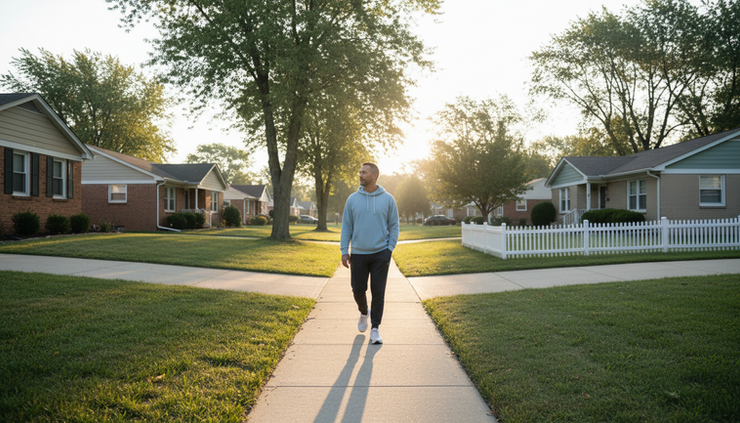
The real escape is earlier action
The hidden health trap is not that Americans lack knowledge. Most people know sleep matters, movement helps, vegetables are useful, stress is harmful, and checkups can catch problems early.
The trap is that American life often makes the unhealthy choice easier, cheaper, faster, and more immediately comforting.
Then the health-care system waits downstream with expensive tools to manage the damage.
Escaping that trap requires honesty. The food environment is part of the problem. So are economic strain, stress, insurance barriers, sedentary work, poor sleep, and delayed care. Personal decisions matter too, especially the small ones repeated every day.
The goal is not perfect health. The goal is to stop drifting.
A better path starts earlier, while there is still time to prevent, reverse, manage, or soften what may come next. Spend attention before the body forces the issue. Spend time before illness takes it. Spend effort before the bill arrives.
YOUR HEALTH NEEDS YOU.
START BEFORE SOMETHING FORCES YOU TO START
You don’t need a heart attack to begin walking.
You don’t need diabetes to begin understanding your glucose.
You don’t need severe obesity to examine your body composition.
You don’t need debilitating weakness before you start protecting muscle.
You don’t need a crisis before evaluating your health.
You don’t need another January 1st.
You don’t need another birthday.
You don’t need another warning.
You need a decision.
Maybe today that decision is simply:
“I want to know where I stand.”
That is enough to begin.
THE SYSTEM MAY NEVER BECOME PERFECT.
The food environment may remain difficult.
Health care may remain expensive.
Insurance may remain complicated.
Your job may remain stressful.
Your schedule may remain busy.
Healthy food may remain inconvenient sometimes.
Life will continue happening.
Waiting for the perfect environment before protecting your health means you may wait forever.
You cannot control the entire American food industry.
You cannot control your insurance company’s policies.
You cannot control every health-care rule.
You cannot control the economy.
You cannot control your genetics.
You cannot control aging.
But you can control far more than doing nothing suggests.
You can ask questions.
You can learn your numbers.
You can move.
You can build strength.
You can improve your sleep.
You can change what enters your kitchen.
You can seek medical care.
You can take appropriate medication.
You can address problems earlier.
You can budget something for your health.
You can stop postponing yourself.
DOING NOTHING IS ALSO A DECISION.
Every day you delay is still part of your health story.
So ask yourself:
What am I waiting for?
A diagnosis?
A frightening lab result?
A hospital visit?
A photograph I don’t recognize myself in?
The day I can’t keep up with my children?
The day my body finally demands the attention I refused to give it?
Or—
Could I start now?
AT PHARMXHEALTHONE, WE BELIEVE HEALTH DESERVES TO BECOME A PRIORITY BEFORE IT BECOMES AN EMERGENCY.
We are a cash-pay medical clinic.
Our services, treatments and products are paid out of pocket.
We understand that means our patients make a deliberate financial decision to work with us.
We respect that decision.
And we believe the conversation shouldn’t simply be:
“Does my insurance pay for this?”
It should also be:
“What is my health worth to me?”
“What information do I need?”
“What should I understand about my body?”
“What should I address now rather than later?”
“What options are medically appropriate for me?”
“What could my life look like if I begin taking my health seriously today?”
If those are questions you are finally ready to answer, we would be honored to begin the conversation with you.
CALL PHARMXHEALTHONE
561-778-8121 or Book Your Consultation Appointment Online.
You do not have to purchase everything.
You do not have to solve everything in one day.
You do not have to become perfect.
You simply have to decide that your health deserves your attention.
Because you have spent years investing in everything around you.
Your house.
Your career.
Your business.
Your family.
Your future.
Maybe it is time to invest intentionally in the person all of those things depend on.
YOU.
YOUR INSURANCE CARD MAY HELP PAY FOR HEALTH CARE.
YOUR DOCTOR MAY HELP GUIDE YOUR HEALTH CARE.
BUT YOUR HEALTH BELONGS TO YOU.
And there may be no possession, purchase, promotion, vacation, automobile, handbag, pair of shoes or cup of coffee more valuable than having the health to enjoy the life you’ve worked so hard to build.
Don’t wait until being sick makes health valuable.
Give it value now.
Medical and educational disclaimer: This article is intended for general educational purposes and does not constitute medical advice, diagnosis or a guarantee that disease can be prevented. Individual risks and treatment needs vary. Prescription medications and medical treatments require evaluation by an appropriately licensed medical provider. Not every service described is appropriate for every patient. Evidence and regulatory status vary among wellness and regenerative products and services. Health insurance remains important for emergency, hospital, specialist, preventive and catastrophic medical care, and readers should not discontinue insurance coverage or prescribed medical care based on this article. PharmXHealthOne operates using a cash-pay model for its services, treatments and products.


Comments